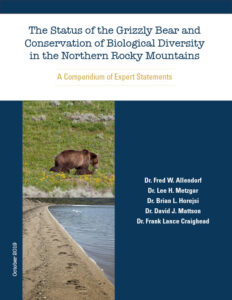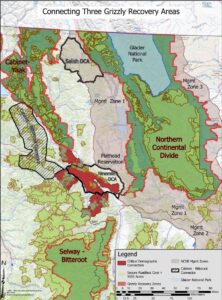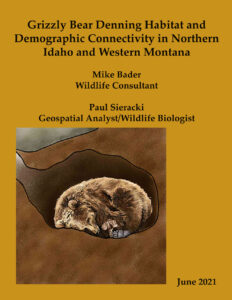
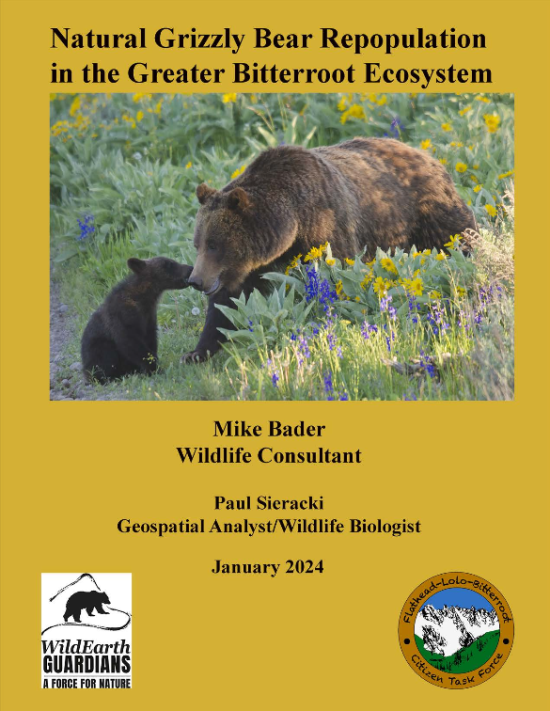
Prepared for the new Bitterroot Grizzly Bear Recovery EIS process, the report estimates that female grizzlies may reach the Bitterroot Ecosystem (BE) within the next decade. Based on verified observations of females with cubs and new published research on female grizzly bear habitat connectivity, potential routes to the Bitterroot are used to help show where and how soon female grizzly bears may reach the BE.
Specifically, the report also estimates the contiguous Northern Continental Divide Ecosystem population could move six miles into the BE within 5 years, and after 15 years move 18-25 miles to occupy more of the area. At that point dispersers ahead of the main population would move deeper into the BE.
Many grizzly bears have already reached the BE and adjacent areas including a verified den site, verified photographs and tracks. A federal court ruling in Alliance for the Wild Rockies v. Cooley found the old U.S. Fish & Wildlife Service plan designating an “experimental, non-essential population” is no longer valid and a new EIS must be completed by October, 2026.
The report argues against moving grizzly bears by trucks or other human-assisted means to get female grizzly bears to the BE stating: “Natural immigration is a viable strategy which must be considered and fully analyzed in the upcoming EIS. We believe that the law and the science direct that the Bitterroot Ecosystem grizzly bear recovery strategy be based on natural immigration facilitated by protected habitat connectivity areas and with the full protection of the Endangered Species Act.”
Scientists have long said that reoccupation of the Bitterroot Ecosystem is required for long term recovery of grizzly bears in the Northern Rockies. The key to this is habitat areas that connect isolated Recovery Areas and reduction of human-related mortality.
The report offers a number of recommendations, including:
- Minimizing all forms of mortality caused by people;
- Constructing wildlife crossings over highways and rail lines at key locations to allow grizzlies safe passage across them;
- Expanding rules to improve food storage and other attractants, like garbage, so it doesn’t attract bears and create conflicts with people;
- Reducing road densities within areas of connectivity;
- Substantially increasing the core Bitterroot Recovery Area.
Download the Report (PDF)