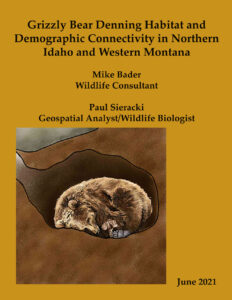
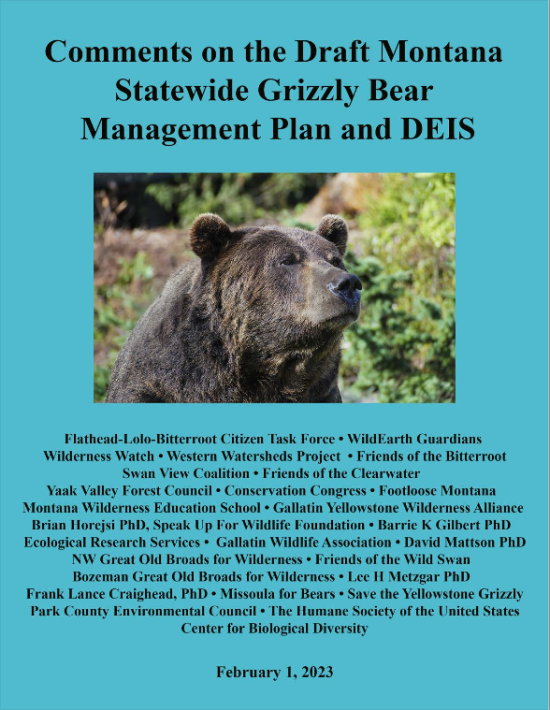
The Flathead-Lolo-Bitterroot Citizen Task Force joined 22 conservation organizations and leading grizzly bear scientists in submitting more than 100 pages of comments calling on Montana Fish, Wildlife & Parks (FWP) to withdraw and rewrite its Draft Statewide Grizzly Bear Management Plan. The coalition argues that the proposal is scientifically flawed, legally deficient, and focuses on preparing for trophy hunting rather than completing grizzly bear recovery.
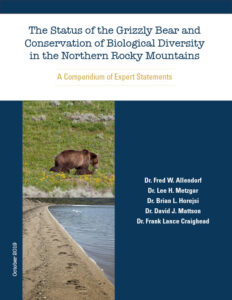
The organizations and scientists signing the comments include the Flathead-Lolo-Bitterroot Citizen Task Force, WildEarth Guardians, Wilderness Watch, Western Watersheds Project, Friends of the Bitterroot, Swan View Coalition, Friends of the Clearwater, Yaak Valley Forest Council, Conservation Congress, Footloose Montana, Montana Wilderness Education School, Gallatin Yellowstone Wilderness Alliance, Speak Up For Wildlife Foundation, Gallatin Wildlife Association, Missoula for Bears, Save the Yellowstone Grizzly, Park County Environmental Council, The Humane Society of the United States, the Center for Biological Diversity, Friends of the Wild Swan, Northwest Great Old Broads for Wilderness, Bozeman Great Old Broads for Wilderness, along with noted grizzly bear scientists Dr. Brian Horejsi, Dr. Barrie Gilbert, Dr. David Mattson, Dr. Lee Metzgar, and Dr. Frank Lance Craighead.
At the heart of the criticism is the plan’s unmistakable emphasis on preparing for a future grizzly bear hunting season. Rather than focusing on restoring a fully connected, self-sustaining grizzly population, the plan would allow substantial population declines before management action is taken and intentionally manage lower bear densities in the very landscapes needed to reconnect isolated populations.
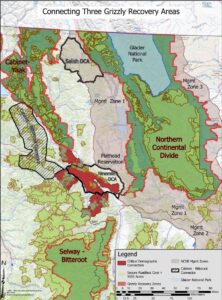
The coalition argues that Montana occupies a unique position in grizzly bear recovery. The state contains all or portions of the Northern Continental Divide, Greater Yellowstone, Cabinet-Yaak, and Bitterroot Recovery Areas, as well as nearly all of the habitat corridors needed to reconnect these populations. Protecting these landscapes is essential if grizzly bears are to regain the genetic diversity and resilience needed for long-term survival. Instead, the draft plan treats many of these connectivity areas as places where grizzly bears should be suppressed rather than encouraged.
The report also challenges Montana’s proposed population objectives. Under the draft plan, management action would not occur until the Northern Continental Divide population approached 800 bears, while the Greater Yellowstone population could decline to 500 bears before intervention. The coalition argues these are dangerously low thresholds and notes that modern conservation science supports a connected Northern Rockies metapopulation of approximately 2,500 to 3,000 grizzly bears to ensure long-term genetic and demographic viability.
The comments also highlight the precarious status of Montana’s smaller grizzly populations. The Cabinet-Yaak Ecosystem supports only about 50 bears, while the Yaak subpopulation has just 25 to 30 grizzlies, making it one of the smallest and most endangered grizzly bear populations in North America. Scientists warn that without natural connectivity to larger populations, these bears remain at serious risk of extinction. Meanwhile, recovery in the Bitterroot Ecosystem remains incomplete despite increasing evidence that grizzly bears are naturally returning to the region.
The coalition also disputes Montana’s claim that trophy hunting would reduce conflicts between people and grizzly bears. Citing numerous peer-reviewed studies, the report concludes that hunting is unlikely to reduce conflicts, can increase mortality of reproductive females, disrupt bear social structure, and slow recovery efforts. Instead, the authors recommend investing in proven coexistence measures such as securing attractants, reducing road impacts, protecting secure habitat, maintaining wildlife corridors, and expanding public education.
Other concerns raised in the report include habitat fragmentation, expanding recreation, climate change, disease, outdated population data, increasing conflicts caused by unsecured attractants such as backyard chickens, and state laws expanding wolf trapping and snaring in grizzly bear habitat. The coalition argues that these cumulative threats make proposals for grizzly bear trophy hunting even more irresponsible.
The coalition’s conclusion is straightforward: grizzly bear recovery in the Northern Rockies is not finished. Montana should be leading efforts to reconnect isolated populations, restore the Bitterroot Ecosystem, protect wildlife corridors, and ensure long-term recovery—not managing grizzly bears for population declines and future trophy hunting. Science—not politics—should guide the future of one of North America’s most iconic wildlife species.
Download the Comments on the Draft Montana Statewide Grizzly Bear Management Plan and DEIS (PDF)